Home
General Information

Show Info
FAQ
Buy a Ticket
Hotel Info
Scooter
Bus Trips
Raffle Quilts
Volunteer
Contest Info
Contest Winners
Special Exhibit
Road to Virginia
Vendors & Classes

Class Information
Faculty Announcement
Faculty Application
Vendor Application
Sponsors
Contact
My Account
Create an Account
Login
Enter
My Home page
Edit my Information
My Entries
My Schedule
Lectures
Show Guide
Change password
Contact Us

Archive for the ‘Road 2014’ Category

First Impressions

Wednesday, October 9th, 2013

Everyone knows that first impressions are extremely important. They set the tone and expectations for what will happen later. When you walk through the doors of the Ontario Convention Center for Road to California, we want your first impression to be something special – just like the event itself. hall2

Past themes in the arcade have included winter icicles and honoring individual quilters. For the past three years, the massive hallway has been adorned with quilts provided by quilt guilds from throughout Southern California.

How are the guilds chosen? Any quilt association can submit an email to Road requesting to be considered. The guild to be honored is chosen randomly from all the submissions. Once chosen, the guild then picks 35 quilts to be displayed. The only requirement is that the quilts must be at least 6 feet long. Road staff supervises the hanging of the quilts on special wiring in the arcade.hall4

While the exhibits on the show floor tend to offer quilts that are created by artists and specialty quilters, the guild quilts showcased in the arcade are more traditional in workmanship and provide inspiration for quilters of all skill levels.

So, who will be the featured quilt guild for Road 2014? The Camarillo Quilters Association.

The Camarillo Quilters Association has 300 plus members from the Ventura County area and beyond. Besides exchanging ideas about quilting, learning new techniques, and improving quilting skills, they also work to inform their community about the history and preservation of quilts.Camarillo Quilt Association1
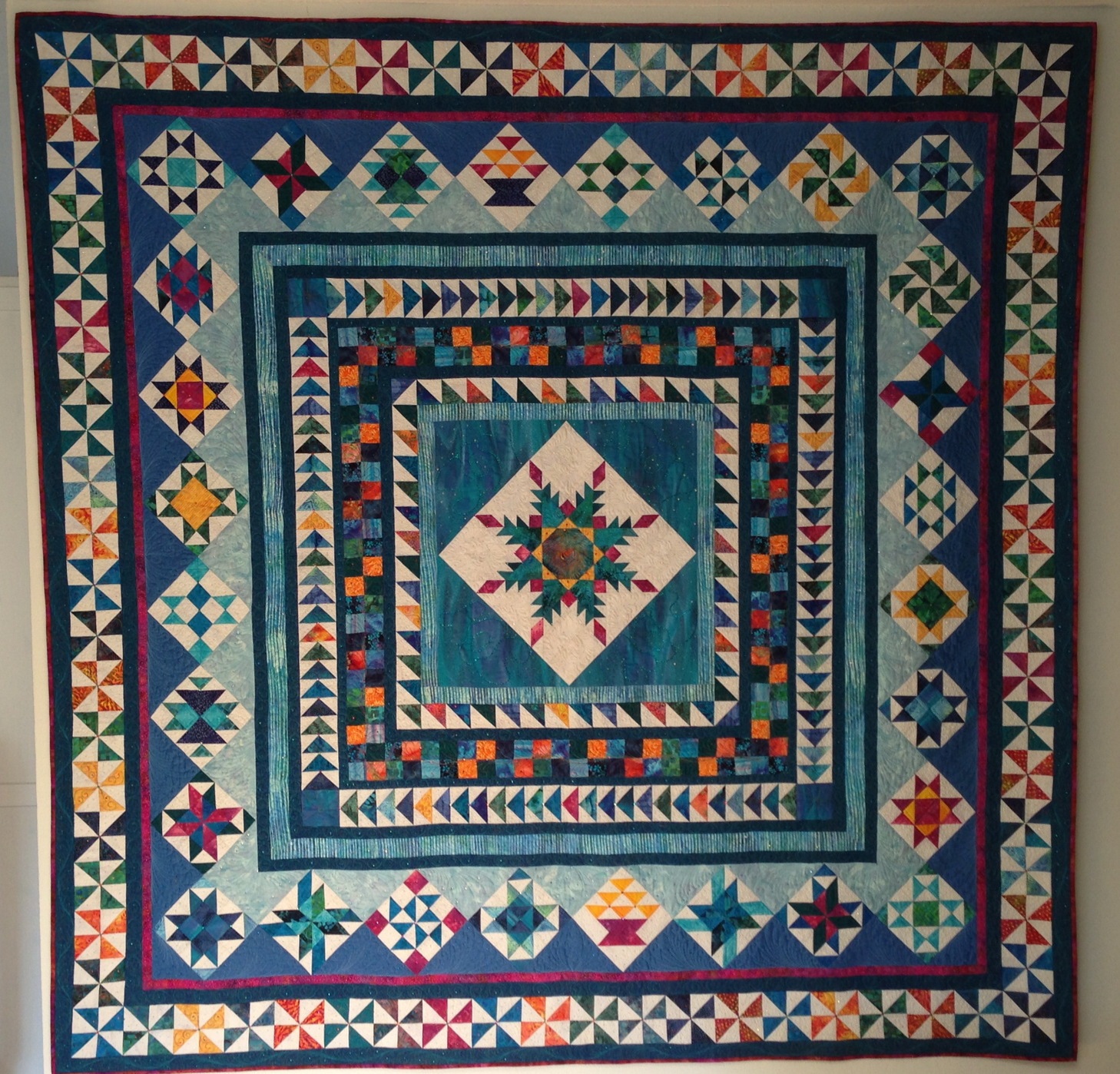
This group gives away 700 quilts a year among their many philanthropies including RAIN Communities, Inc.  (helping homeless families in transitional housing); A New Start for Moms (quilts are given as a motivation and reward for graduation from their parenting skills program); Habitat for Humanity; Life Centers of Ventura County; the Neo-Natal Intensive Care Unit; and convalescent homes.

The association is quite excited to be able to share their quilts in the atrium exhibit. Remarked one of their members: “I have been going to Road for the last 10 years. What a joy it would be to see my quilt up there.”  Previously, they had one quilt that was shown at Road in 1995 and have had the Presidents Quilt 2011-2013.19_CQA_President_Quilt_(3)
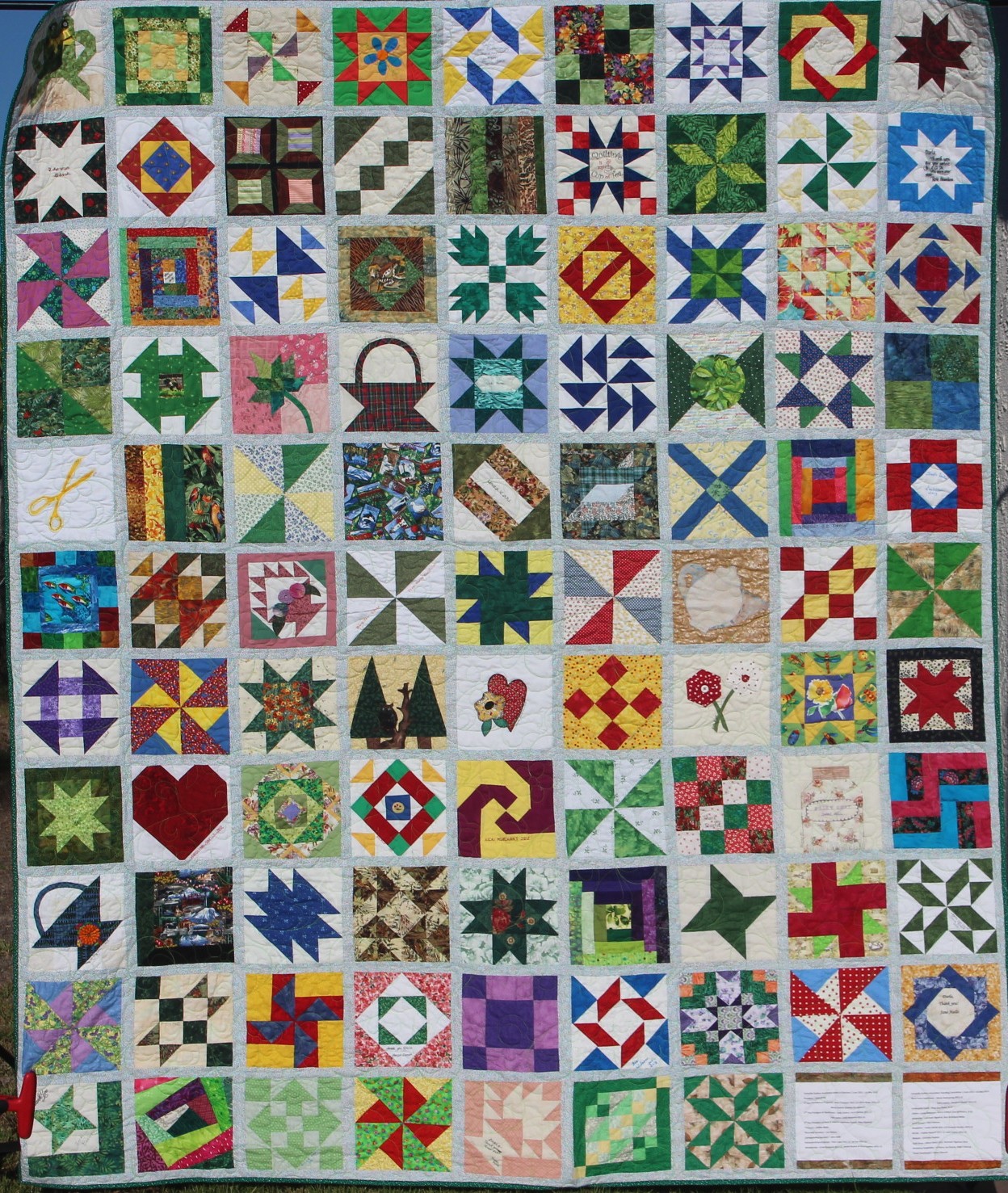
When you come to Road 2014, prepare to look up. A wonderful first impression will be waiting to welcome you.     

]]>

Road 2014 Faculty Spotlight: Meet Norah McMeeking

Saturday, October 5th, 2013

Norah will be teaching #5020 Stacked Hexagon Stars on Friday and a two day class Saturday and Sunday #6701 Cosmati Rings I. Norah head shot

Personal: While Norah McMeeking has traveled as far away as exotic Palermo, Sicily for her quilting endeavors, it was looking at antique quilts at an Apple Festival in a local history museum in Illinois where she first caught the quilting bug. She decided then that “If I had to live among the corn and soybeans, I should get something out of it, so I took a quilting class.”

Norah enjoys the company of her two children, one granddaughter, a “spoiled dog,” and two feral cats. Her favorite foods are green beans, steak, and popcorn. And devil’s food cake. The last book she read was The Paris Deadline by Max Byrd.Norah's dog

When she is not quilting, Norah likes to entertain the neighbors, take photographs, travel, go to museums, and “pet my dog.”

Does anyone else in your family quilt? My niece quilts and my sister and my daughter-in-law “dabble.”

Where do you find inspiration for your quilting? Absolutely everywhere!

What is one quilting tool you can’t live without? Besides my sewing machine? I guess that would be my computer.

What do you like best about teaching? The students of course!Class teaching

What has been the funniest or most embarrassing moment you have had while teaching? Once, about 2 hours in to an intense class on foundation piecing, I said to the students “You do know you won’t finish this in class don’t you?” And a student exclaimed, “Thank God!”

What has been the best class you have taken? I’ve been lucky to take many great classes, but one of the first, from Margaret Miller, stands out for its breadth. Another class I took from Ruth McDowell stands out for a real “ah-ha!” moment. It changed the way I thought about quilt design.

What is your best tip for quilters? Never be afraid to try something. Give yourself time to learn.

What do you want your students to get out of your class? I want my students to gain the confidence they need to do whatever they’d like with their quilting.

Visit Norah on her website: www.bellabellaquilts.comwhatgoesaround missing quilt

 P.S. Norah made this beautiful quilt titled What Goes Around and it is missing. If you have seen it, please let Norah know.

]]>
Sharing a Passion – Helping the World

Wednesday, October 2nd, 2013

Leora Raikin has three passions: embroidery, education, and South Africa. This South African native who now resides in Los Angeles, started African Folklore Embroidery as a means to share and promote her passions.   AFL Logo

Leora learned how to embroider from her mother and she has in turn taught her son. She realized that embroidery has become an endangered art; it isn’t as popular or as well-known as in times past.   Her multi-culture embroidery kits are perfect for quilters, those who love to quilt, embroider, hand applique knit and crochet. She especially enjoys teaching young people — boys and girls alike — through after school programs and her African Folklore Challenge, the basics of embroidery. “When children learn how to embroider at a young age, they are encouraged and teach their parents.”head shot

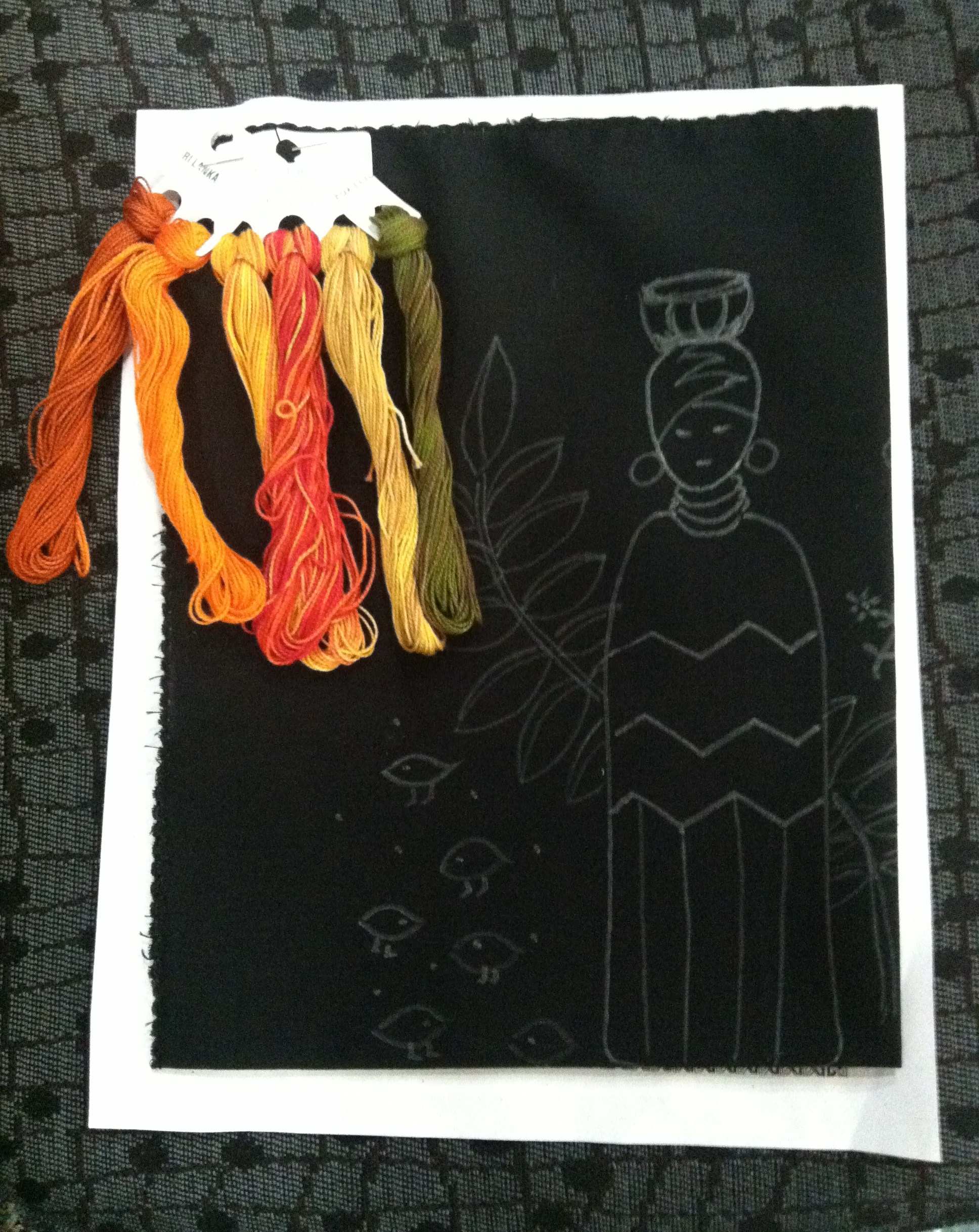
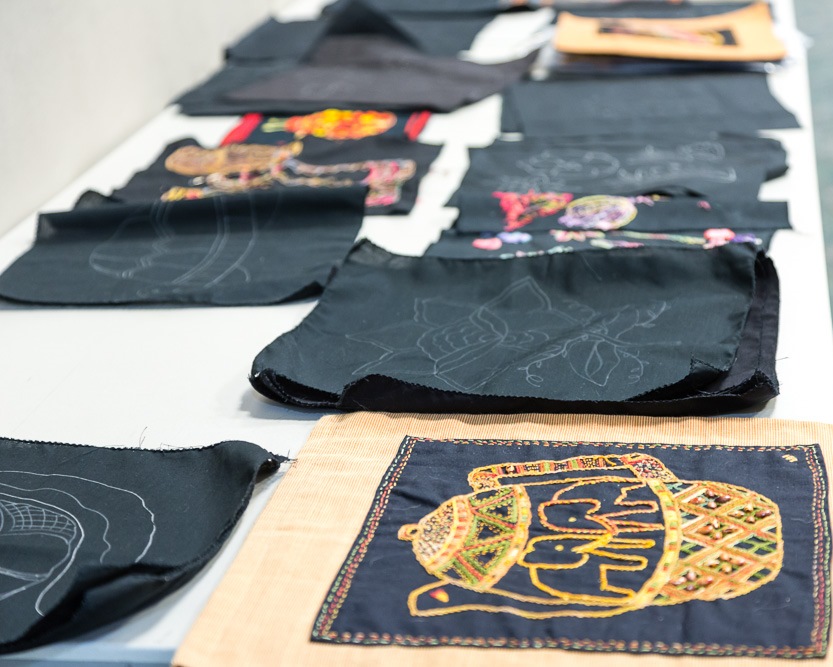
African Folklore Embroidery has over 40 kits available. Many of the kits are inspired by life in South Africa. Each kit features an African design pre-drawn on black over-locked fabric and several brightly colored threads to complete the project. The kits are creative, fun, and feature African geography and culture. They are made for the beginner embroiderer as well as the sophisticated stitcher and are a great take-along project. All of the kits can be converted into pillows, purses, quilts and wall-hangings. (A great way to get rid of one’s fabric stash!!) The extreme contrasts of brightly colored threads against the black fabric make any completed design both striking and beautiful.African Folklore Embroidery Kit

The threads found in the kits are hand died in South Africa and are environmentally friendly. Production of the threads provide employment and income for women living in that country.   

There is no right or wrong way to stitch a kit.  Individuals choose which threads to use and go on to create their own interpretation of the design. AFE Quilt

The African Folklore Challenge was started as a way to encourage people to finish their projects and earn prize money. Additional proceeds go to the organization, Kidzpositive, a charity devoted to helping HIV-positive children in South African. Participants purchase a kit, complete it and submit it to the challenge. The challenge offers $500 in total prize money: $250 Grand Prize; $150 Second Place Prize; and two-$75 Third Place Prizes. The challenge encourages not only creativity but a love for handiwork as well.

At Road 2013, Leora had a booth on the vendor floor, selling kits and a display showcasing winners from past African Folklore Challenges. For Road 2014, Leora will be teaching two evening classes: 4035 African Folklore Embroidery on Thursday and 6039 Advanced African Safari on Saturday. Taking one of Leora’s classes is like going on a safari without the jet lag!!!  AFL Class

Please visit Leora on the American Folklore Embroidery website: www.aflembroidery.com


Who taught you how to embroidery?  

]]>

Road 2014 Faculty Spotlight: Meet Karen Sievert

Friday, September 27th, 2013

Karen will be teaching half day classes on Monday, Tuesday, and Wednesday where every student will have their own machine head featuring Gammill machines. Monday: #1006 The Art of Trapunto and #1007 Mini Whole Cloth Quilts; Tuesday: #2006 Feathers and Flourishes and #2007 The Art of Trapunto; and on Wednesday: #3015 Mini Whole Cloth Quits and #3016 Feathers and Flourishes. Karen is also teaching an all-day class on Thursday #4011 Ready, Set, Go-The Basics of Free-Motion Quilting.  Karen Sievert head shot

Personal: Karen Sievert is a terrific quilter with an international flair. She was born in Kwajalein in the Marshall Islands and has lived in Italy for two years. Consequently, she adores everything Italian. Karen has 3 children (Wayne, Shannah and Travis) whom she is “tremendously proud of,” and two dogs, a Maltese named Harley and a Goldendoodle named Shiloh. She enjoys music (it is always playing in her sewing room) and reading. The last book she read was Saving Faith by Jodi Piccoult.

How did you get started in quilting?  My sister dragged me into a quilt shop in 1997, firmly stating that I needed a hobby! I was immediately hooked, had visions of sugar plums dancing in my head, and haven’t looked back since! For those of you old enough to remember what Calgon is, well, quilting is my “Calgon, Take Me Away!”

Does anyone else in your family quilt?  Only the sister who dragged me into that quilt shop! But I’ve recently moved and have another sister, a niece and a great-niece that are all looking to learn!

Where do you find inspiration for your quilting? I think inspiration can be found everywhere! It might be the flower in the garden, a Hallmark card, or the pattern on someone’s sweater. The more open I am, the more I see.A Truly Feathered Star

What is the one quilting tool you can’t live without? Wow, that’s a tough question! There are so many tools out there that have made our quilting adventures so much easier. I guess when it comes right down to it, it would be my sewing machine! I love my sewing machine and I think it loves me back! Once, when gone for quite some time, I came home and there was a Post It note on it saying, “I miss you.”

What do you like best about teaching? Easiest question so far! The best thing about teaching is the friendships you make with other quilters! I was a ‘military wife’ for almost 30 years which meant moving…ALOT! I could always find a friend in a quilting group!

What is the funniest or most embarrassing moment you have experienced while teaching?  I once had a group that wanted me to teach a class using prairie points, a very “iron intensive” project! Before the class, they had changed the materials and supply sheets, deleting the irons! To top it off, my class limit is always 24, but for this class 64 women showed up. We had exactly two irons for all of them!!!! I learned then, that a sense of humor coupled with a great deal of flexibility can make anything work! Believe it or not, even though I was ready to “throw up” in the parking lot, it was one of the best classes I’ve ever had!

What has been the best class you have taken? Ok, so this is embarrassing! I’ve only taken one class. And the instructor did most of my work because I was so inept! It was a Stained Glass Vest. Loved the teacher, loved the vest, and though it no longer fits, I still have it!

Want is your best tip for quilters? OK, so I have three. First, measure twice, cut once! Second, always test your seam allowance. And third, like the Nike slogan says, “JUST DO IT!”  

What do you want your students to get out of your class? EVERY THING!!!   Always want to over-deliver, not under-whelm! I want my students to have the faith, confidence, and belief that they can do whatever they envision.

You can reach Karen at www.theniftyneedle.com


]]>
Road 2014 Faculty Spotlight: Meet Karen Witt

Saturday, September 14th, 2013

Karen will be teaching on Thursday #4018 Civil War Sampler, Friday, #5016 Tree of Life Medallion Quilt, Saturday  #6016 Making Reproduction Quilts-19th Century Nine Patch, and on Sunday #7011 Rug Hooking 101Profile

Personal: Karen Witt is all about quilt books. They are her favorite genre to read, especially when they are about antique quilts. (The last book she read was Primarily Quilts by Di Ford).  And Karen has written a quilt book with her daughter Erin published by Kansas City Star titled, Like Mother, Like Daughter.Amazon book cover

Throughout her life, Karen has lived in areas that are known for quilting. She was born in West Virginia, grew up in Ohio, and now lives in Kentucky. She has three children (2 sons and one daughter) and 12 grandchildren. 

How did you get started in quilting? I have always sewed.  I was given a Grandmother’s Flower Garden quilt top made by my great grandmother and was fascinated to think that she had made it and that the fabrics were from her own clothes. When I was working for the University of Kentucky, I was asked to teach a color and design course for quilters. The combination of these events led to my own desire to quilt.

Does anyone else in your family quilt? Both of my grandmothers made utilitarian quilts. They had large families and needed to keep everyone warm. My mother sewed clothing and home decor and made one quilt — a Laura Wheeler pattern from the Cincinnati Enquirer — using scraps from all the clothes she made for me. My daughter Erin is a quilter. She has two degrees in textiles. We have worked together in the quilting industry for several years — as vendors at all the major quilt shows, designing patterns, and making quilts for Market and magazine publication.

Where do you find inspiration for your quilting? I love the antique quilts and feel a real connection to quilters in the past. I spend a lot of time looking at museum exhibits and studying quilt history.

What do you like to do when you are not quilting? I’m a gardener — including lots of herbs that I like to use in cooking and to dry for winter wreaths and bouquets. I also enjoy traveling — either teaching and meeting other quilters or with family and friends.

What is the one quilting tool that you can’t live without? A needle — and thread! I love hand piecing, applique and quilting. I can improvise when I don’t have all the 21st century gadgets so I’m pretty basic when it comes to necessities. And, that’s all the women had to work with in making the antique quilts that I admire so much.  thread and needle

Where is the farthest you’ve travelled that is quilt related? I taught in France for Quiltmania magazine. I had to have an interpreter for the class and all the pattern instructions were converted to centimeters. I was delighted to learn that European quilters love our reproduction fabrics and my patterns!

What do you like best about teaching? It is so exciting to meet quilters in other places! I love to see them use my patterns and personalize these designs to make their own unique creations that reflect their interests and personalities.classpict

What is your best tip for quilters? Have fun!  If you’re not having fun, STOP! Ask yourself, “What can I change to make this fun?”  The best way to make it fun is to make every project “yours.” After all, it is your quilt! If you don’t like the colors, change them. If you don’t like the design, tweak it. We don’t need quilts for warmth. If you’re cold, buy a blanket! Be creative. Take a chance. Just have fun with your quilting!

What do you want your students to get out of your class? I try to create a relaxed, pleasant, affirming classroom and help each quilter discover and develop her/his individual creativity. Since I specialize in making quilts that are reproductions of antique quilts, I like to give my students an understanding of the heritage of quilting and how we share with those from earlier generations.

Visit Karen at www.reproductionquilts.com


]]>

Road 2014 Faculty Spotlight: Meet Patsy Thompson

Wednesday, September 11th, 2013

Patsy will be teaching a two-day class on Monday and Tuesday #1203 Love Birds-Machine Embroidered Applique (MEA), and single day classes on Wednesday #3018 Feathered Wreath Block (MEA) and on Thursday #4019 Everything You Always Wanted to Know About Feathers But…Patsy-Bio-Photo-1

Personal: Patsy Thompson currently resides in not one but two states: Ohio and North Carolina. When she is not traveling between these two locales, she is enjoying eating chocolate and spending time with her husband whom Patsy says, “is the funniest and kindest person I know.”

How did you get started in quilting? I have a niece that I have adored since the day she was born.  When she was about to move from a crib into a “real bed,” I decided to make her a quilt.  I had no idea how to do it and didn’t know anyone else who did.  This was back in the 1970’s when there were no quilt shops, so I kind of had to “wing it.”  It was an easy quilt, made of many fairly large blocks (I think they were 8-9 inches square) and when I went to quilt it, I had no idea what to do.  I used an ultra-high loft polyester batting from Joann Fabrics and didn’t even baste it.  (Who knew?!)  I machine quilted it and the batting all shifted so there were these huge blobs of quilt in several places.  It really wasn’t much of a quilt, but she loved it to death and that experience got me hooked! 

Where do you find inspiration for your quilting? Everywhere!  I am especially inspired by floral scenes, but pretty much everything I encounter in my daily life gives me some type of inspiration, whether it’s a combination of colors or shapes or patterns.Love-Birds-Wall-hanging

What is the one quilting tool that you can’t live without? I have two that are tied for first place.  The first is the rotary cutter.  They didn’t exist when I first started quilting and I spent many years cutting out fabric pieces by pinning small paper triangles, etc. to the fabric as a template.  My whole life changed when Olfa debuted that rotary cutter!  The other tool that has revolutionized my life is my Sizzix Big Shot machine.  That has allowed me to quickly/easily cut out intricate shapes for applique that I would never even try to cut by hand. That little machine has really spoiled me!

What was the best class you have taken? It was a class on free motion quilting taught by Caryl Bryer-Fallert.  Mid-way through the class, I had an “aha” moment and finally learned to stitch a free-form feather. I had tried to do this so many times unsuccessfully, so learning this skill meant the world to me.  The rest of the class was also fabulous, but it didn’t matter because I had finally conquered feathers!Single Feather

What do you like best about teaching? There is nothing more rewarding than seeing another quilter learn a new skill, especially if it’s something they’ve struggled with.  The other thing that really makes my day is inspiring quilters to try something new.

What is your best tip for quilters? Loosen up!  Let yourself bask in the fun of quilting and don’t worry so much about the rules.Feathered-Wreath-Block-Purple-Background

What do you want your students to get out of your class? I want them to leave feeling thrilled and inspired by what they have seen and spent the last several hours doing.  If they leave the class jacked up and dreaming of ideas of how to use the skills they just learned, I will have done my job.

Please visit Patsy at www.patsythompsondesigns.com


]]>

Proud To Be A Partner With Quilted in Honor

Wednesday, August 28th, 2013

Do you have a military connection? Maybe you have had a loved one serve or know of someone who is currently serving. Maybe you have personally served. Or maybe you just have respect and honor for those who have or are dedicating their lives to our country.Veterans

Whatever your connection, there is a story to tell and that is what the program Quilted in Honor is all about. Led by Island Batik and supported by the quilting industry, including Road to California, Quilted in Honor was designed to inspire quilters, sewing enthusiasts, guilds, and shops to rally around our troops and give back in an innovative and unique way, creating projects that tell the human side of what “serving our country” really means to soldiers and their families back home.Quilted in Honor

It is hoped that through the collective efforts within the quilting industry, attention and donations will be given to Operation Homefront– a leading national charity providing emergency financial and other support to service members and Wounded Warriors. Operation Homefront is rated among the top charities nationally, with over 99% of its resources going towards assisting the lowest ranking and lowest paid service members. Much like the military itself, Operation Homefront has a “no man left behind” attitude as it works with veterans and their families across the United States.  Besides financial assistance, Operation Homefront also gives aid to challenges with everyday life such as auto repairs and donations, home repair and items, moving and relocation, food assistance and health care services. In addition, Operation Homefront provides support to families learning how to cope with and adjust to family members who have been wounded or injured in service, transitioning to civilian life, and community involvement. Many of their staff, including the CEO, are former military themselves and therefore know firsthand how best to reach out and assist soldiers and their families.    

The flagship of the Quilted in Honor program is Island Batik’s Quilted in Honor fabric line. Made up of 45 vibrant fabrics designed by top designer Kathy Engle, they are sure to be a popular foundation for all kinds of sewing and quilting projects. Additional companies including Aurifil, Pellon, and C&T Publishing, have created additional product lines or are providing marketing opportunities and promotional support for the project.Quilted in Honor Partners

Road to California got involved with Quilted in Honor because of its far reaching effects. As Carolyn explains, “Operation Homefront helps military families in so many ways, not just through quilt donations but with so much more. I hope our Road family will join in and support this cause.” Look for future announcements on the different ways Road to California will be promoting Quilted in Honor at the quilt show in January.      

]]>

Road 2014 Faculty Spotlight: Meet Lisa Sipes

Thursday, August 22nd, 2013

Lisa will be teaching the following all day, hands on long arm quilting classes: Thursday #4012 The Great Feather Debate; Friday #5011 Line It Up; and Saturday #6011 Back to the Basics. She is also teaching a half day hands on long arm quilting class Sunday #7007 Flat Factor. Portrait

Personal- A Vegetarian with a “very spoiled fat cat” named Lily, Lisa Sipes was introduced to quilting by her mother. She had been “basically bored with life,” and her mom told her to give quilting a shot.  Lisa originally thought that her mom was nuts, because “of course, I had that stereotypical idea of what I thought quilting was.”  The first time she saw a long arm quilting machine, she did some custom quilting on a quilt top.  As Lisa says, “The rest is history.”  Interestingly, Lisa learned to long arm quilt before she learned to properly use a rotary cutter. Quilting

Where do you find inspiration for your quilting? Everywhere.  I don’t even really have to look for it.  Most of my greatest quilt ideas come from my beliefs and ideals.  None of them have come to fruition yet (who has the time?), but when they do, it will sort of be an unveiling of a type of quilting that most don’t expect from me.

What is the one quilt tool that you can’t live without? I’m going with two, because they’re both equally important.  One is the Sewline Air Erasable ballpoint pen.  I don’t mark motifs, and really don’t mark much at all when I’m quilting.  But I like to have some registration lines or reference points and I don’t want to have to remove them.  I’ve tested the Sewline pen with several different types of fabrics and never have to worry about it becoming permanent (unless it’s pressed).  The other is Janet-Lee’s Other Favorite ruler from The Gadget Girls.  SMy quilting has transformed exponentially over the last year and a half with my use of straight lines, all accomplished with that ruler.

What do you like to do when you aren’t quilting? I think the better question is, “When are you not quilting?” Seriously!  If I’m not physically quilting, I’m planning for quilting, writing about quilting, talking about quilting, teaching quilting… You get the idea. But when I allow myself to have a life beyond quilting, I really enjoy live music and really good food.  Preferably simultaneously.Lisa and quilt

What do you like most about teaching? My absolute favorite thing is seeing that “light bulb moment” where you can tell just by the look on someone’s face that they *get it.*  I love encouraging others to find their own path and their own quilting voice.  I think that for most people, half the battle is giving themselves permission to try something new.  And I’m more than happy to be a cheerleader.

What is the funniest or most embarrassing moment you’ve had while teaching? I was quilting on a machine brand I’d never used before.  The hopping foot was really skinny, and backwards (or, I guess sideways) from what I was used to on my Gammills.  I was demo-ing ruler work and since the foot was skinny and weird to me, the ruler kept slipping over it; the needle got stuck on the ruler and seized up the machine.  That happened three times before I put the ruler down and switched to free motion.  I think I recovered okay!

What has been the best class you have taken? I haven’t really taken any classes.  I did take a whole-cloth class with Karen McTavish in 2011, but I mostly helped the other students (read/ talked with other students) with their quilts and came home with the same blank piece of fabric I went to class with. 

What is the farthest you have traveled that is quilt related? I haven’t been out of the country, and I really don’t plan to as of right now.  But considering I’m in middle-USA (for now!) I suppose each of the coasts would have to be the farthest I’ve traveled.  It seems I have done a lot of work out on the east coast. I’m looking forward to adding more fun quilty goodness to my schedule on the west coast.

What is your best tip for quilters? Stop talking about it and just DO IT, already.  You’ll never know what you’re capable of until you try.doodlecollage

What do you want your students to get out of your classes? Well, that of course depends on the class.  Of course I want all of my students to have a good time, to walk away from the classes with bits of knowledge or inspiration that will help them in their journey, and I want them to leave feeling comfortable with their direction.  I also try to remind them that if they ever have any questions or need any additional help, I’m only an email away.  And even if they don’t need additional help, email me pictures of creations inspired by the class! It makes my day. 🙂Modern Quilt

You can visit Lisa at:  http://thatcrazyquiltygirl.blogspot.com


]]>

What is Modern Quilting?

Saturday, August 10th, 2013

There has been a big movement in the quilting world the past few years called Modern Quilting. While its name would lead one to believe this is something new and unique, in actuality, its roots are from techniques used for much of the 20th century.

According to the Modern Quilt Guild, “Modern quilts are primarily functional and inspired by modern design. Modern quilters work in different styles and define modern quilting in different ways, but several characteristics often appear which may help identify a modern quilt. These include, but are not limited to: the use of bold colors and prints, high contrast and graphic areas of solid color, improvisational piecing, minimalism, expansive negative space, and alternate grid work. “Modern traditionalism” or the updating of classic quilt designs is also often seen in modern quilting.modern_quilts_img_1581

A defining event for modern quilting occurred in 1998 when Martha Stewart Living featured Denyse Schmidt, calling her quilts a “chic, modernist aesthetic.” For many quilters in the early days of the movement, this was a key inspirational moment.”

There are four factors that have contributed to the growth of the modern quilt movement: the cultural shift of quality design being recognized by the general public, affordable digital cameras, the changing fabric industry and the rise of social media.modern_quilts_img_1594

Road to California understands the popularity of this quilt genre and has always shown support. Classes have been offered featuring modern quilt designers and quilters. For Road 2014, not only are more modern quilt classes being offered, but also a new Modern Quilt Category has been added to the quilt contest. The Modern Quilt Category has two subcategories to choose from. The first is Modern Piecing which includes quilts that utilize improvisational piecing techniques. The second sub-category is Negative Space which includes quilts set with large amounts of negative space including quilts with alternative grid work and modern abstract design. Prizes for the new Modern Category include Best Modern Quilt $2,000 sponsored by Modern Quilts Unlimited; Best Modern Piecing $1,000 sponsored by Stash Books and Best Use of Negative Space $1,000 sponsored by Stash Books. Quilts entered in to the Modern Quilt Category are also eligible to win other prizes such as Best of Show $6000, sponsored by Gammill . The deadline to enter a quilt is October 1, 2013. 

What do you think about modern quilting?


]]>

Road 2014 Faculty Spotlight: Meet Laura Murray

Wednesday, July 31st, 2013

Laura will be teaching on Thursday 4034 Panitstik Inspirations OLYMPUS DIGITAL CAMERA

Personal: Laura Murray hails from the Mid-West. She was raised on a small farm in Minnesota. The owner of two Siamese cats, Laura enjoys walking and reading. The last book she read was one of the Mary Russell stories by Laurie R King.  Linda travels 35,000 miles, coast to coast, on an annual basis to vend at quilt and sewing shows across the country. 

How did you get started in quilting? After a long history of sewing, crocheting, and needlework, I was ready for something new.   Inspired by a daughter who wanted a handmade quilt, I decided to take a sampler class at the nearby quilt shop.   There, I learned basic skills and completed a queen size quilt, using 16” hand sewn blocks, and the “quilt-as-you-go” method.    More importantly, I discovered art quilts — a medium that I hadn’t known existed.  This launched me on a journey through the competitive, juried quilt show circuit that was rewarded by blue ribbons at large shows.    My focus on continual skill development  led me to many workshops with national level teachers, who all contributed to my skills and knowledge.

Where do you find inspiration for your quilting? Nature, art galleries, books, the internet. quilt exhibits.  Inspiration is everywhere!OLYMPUS DIGITAL CAMERA

What is the one quilting tool that you can’t live without? Because I can create the fabric of my dreams with paintstiks, I would find it extremely restrictive to depend on purchased fabric for my projects.   I would find it hard to live without Light Steam-a-Seam2, because I use it extensively in my techniques.

What is the best class you have taken? Jane Dunnewold’s Complex Cloth Workshop

What do you like best about teaching? Seeing the excitement and pleasure of my students who have just created an original design.

What is your best tip for quilters? Learn to understand the huge importance of value in selecting fabrics for your projects.  Color gets all the credit, but value does all the work. 

What do you want your students to get out of your class? I want them to have fun while learning new skills.  This should be the joyful part of our lives!

You can visit Laura on her web site, www.lauramurraydesigns.com

]]>